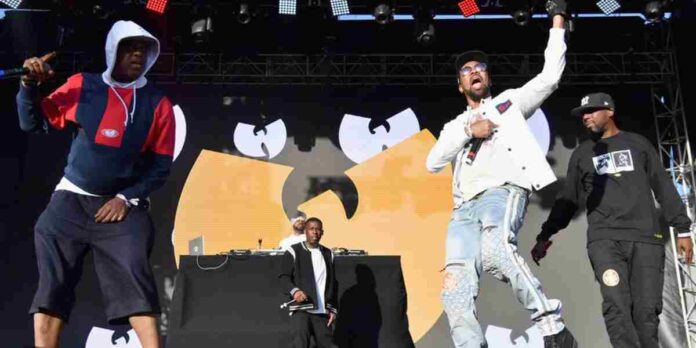
The Wu-Tang secret album is back in the spotlight as Netflix drops The Disciple: A Wu-Tang Fable, a new documentary on the legacy, ambitions, and fallout from Once Upon a Time in Shaolin. The documentary chronicles how the project defied the typical music industry model by positioning the album as a singular piece of art rather than a product for mass consumption.
Recorded secretly over approximately six years, the 31-track album was completed between 2007 and 2013. Only one physical copy was produced, housed in an ornate, handcrafted silver case. Its creators also imposed a restriction preventing commercial release for 88 years, meaning the album cannot be commercially released before 2103 under the original terms.
Such an unconventional strategy was intended to challenge how music is valued in a time where streaming services provide instant access to millions of songs. Rather than competing for streams and sales, the label wanted the album to become an elusive cultural object.
The documentary focuses on Tarik Azzougarh, aka Cilvaringz, a Dutch-Moroccan rapper and producer who started out as a fan of Wu-Tang Clan before making it into the band’s creative collective.
What compelled him to go to New York and work with his musical idols was his passion, and that eventually landed him in contact with RZA, the original member and chief producer of the group. This partnership resulted in the album’s creation.
The film traces Cilvaringz’s journey and reveals how a fan’s idea developed into an extraordinary recording project. It also examines the personal relationships, creative decisions, and competing ambitions behind an undertaking that would attract worldwide attention.
The film is directed by Academy Award-winning filmmaker Joanna Natasegara, and it interweaves archive footage with interviews and reflections about the making of the record. RZA is an executive producer on the film and a part of the film’s story of how the project came about.
The Controversial $2 Million Sale
The record started to get attention in 2015 when it was auctioned off for a reportedly $2 million to pharmaceutical executive Martin Shkreli. It generated some buzz at the time, but Shkreli would later be sentenced, complicating the future ownership of the album.
Shkreli was found guilty of securities fraud, and the album was confiscated in an effort to reclaim money tied to his case. The U.S. government auctioned it in 2021, selling it to a unidentified new owner.
The ownership debate raised serious questions about whether a unique work of music should be treated like a painting or sculpture, mainly when arrangements prevent ordinary listeners from hearing it.
For Wu-Tang, the experiment was meant to prove that music had become devalued in the internet age. But the connection to Shkreli made the album much more about ownership and about the outlandish controversy surrounding Shkreli than about art.
The limits on the album continue to be what makes it such a unusual historical artifact. While speculation about its limited distribution and private existence has long been part of its lore, its contract can’t be put out normally before 2103.